
VENUS ENVY
Choose your favorite Venus Sculpture, write down your deepest desire, and see where it leads……. In the universe lie limitless possibilities

The Venus of Willendorf, discovered in 1908 in Willendorf Austria, is estimated to be created about 30,000,000 BCE as a FERTILITY GODDESS. Archeologists believe that she was held in the palm of the hand or put in a pocket. For Elizabeth, this icon of prehistory is not only sacred as a representation of historic human development, but because she a symbol for the place of pure potentiality within all of us. As a play on the Freudian Term “Penis Envy” We affectionately call her Venus Envy as she is a symbol for all that is possible. Quite the enviable quality indeed. Elizabeth makes these forms form both clay and brass as a reminder that there is fertile ground in all of us just waiting to be explored and tapped into. We challenge you to go and find it!

The Venus of Willendorf, discovered in 1908 in Willendorf Austria, is estimated to be created about 30,000,000 BCE as a FERTILITY GODDESS. Archeologists believe that she was held in the palm of the hand or put in a pocket. For Elizabeth, this icon of prehistory is not only sacred as a representation of historic human development, but because she a symbol for the place of pure potentiality within all of us. As a play on the Freudian Term “Penis Envy” we affectionately call her Venus Envy as she is a symbol for all that is possible. Quite the enviable quality indeed. Elizabeth make these forms from both clay and brass as a reminder that there is fertile ground in all of us just waiting to be explored and tapped into. We challenge you to go and find it!
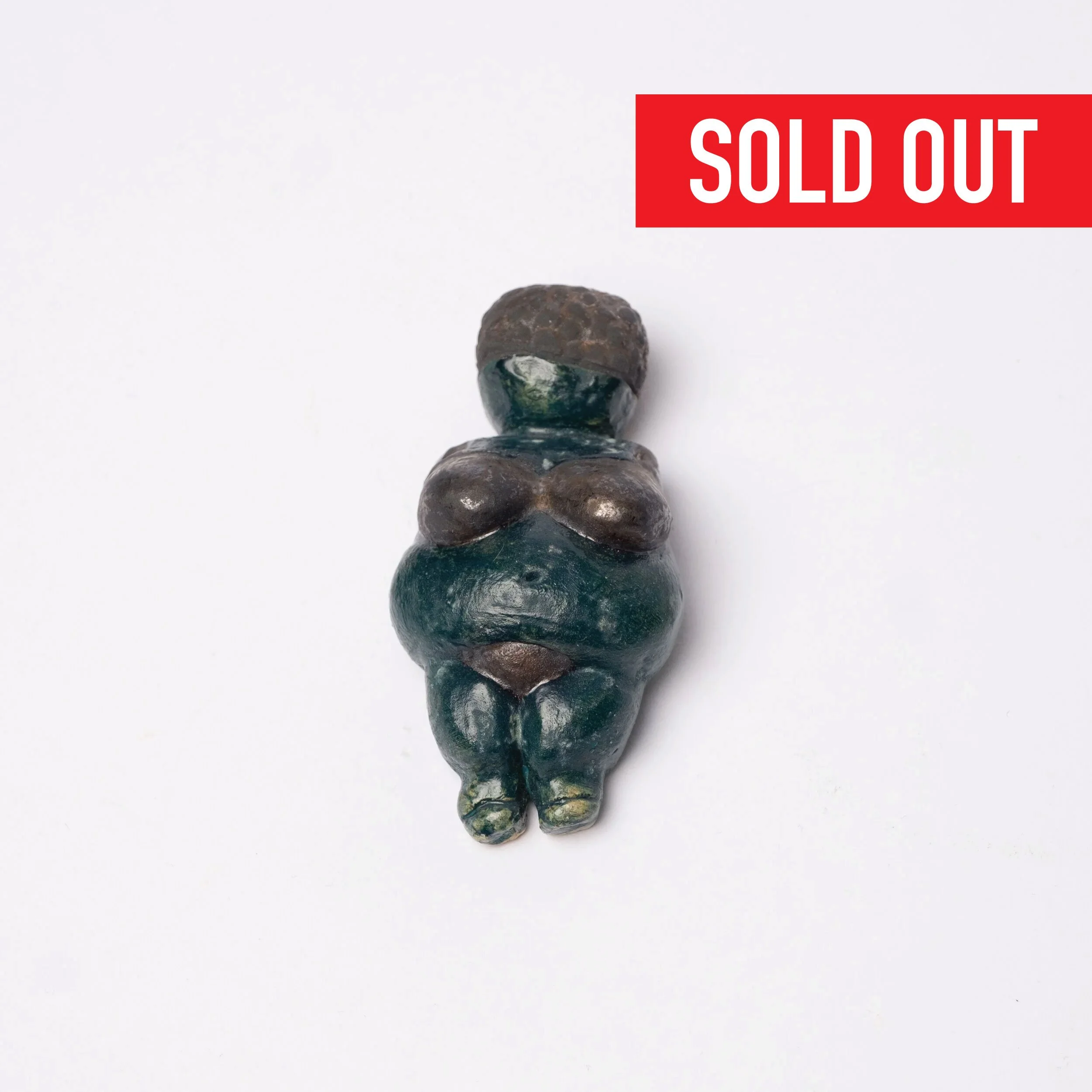
The Venus of Willendorf, discovered in 1908 in Willendorf Austria, is estimated to be created about 30,000,000 BCE as a FERTILITY GODDESS. Archeologists believe that she was held in the palm of the hand or put in a pocket. For Elizabeth, this icon of prehistory is not only sacred as a representation of historic human development, but because she a symbol for the place of pure potentiality within all of us. As a play on the Freudian Term “Penis Envy” we affectionately call her Venus Envy as she is a symbol for all that is possible. Quite the enviable quality indeed. Elizabeth make these forms from both clay and brass as a reminder that there is fertile ground in all of us just waiting to be explored and tapped into. We challenge you to go and find it!

The Venus of Willendorf, discovered in 1908 in Willendorf Austria, is estimated to be created about 30,000,000 BCE as a FERTILITY GODDESS. Archeologists believe that she was held in the palm of the hand or put in a pocket. For Elizabeth, this icon of prehistory is not only sacred as a representation of historic human development, but because she a symbol for the place of pure potentiality within all of us. As a play on the Freudian Term “Penis Envy” we affectionately call her Venus Envy as she is a symbol for all that is possible. Quite the enviable quality indeed. Elizabeth make these forms from both clay and brass as a reminder that there is fertile ground in all of us just waiting to be explored and tapped into. We challenge you to go and find it!
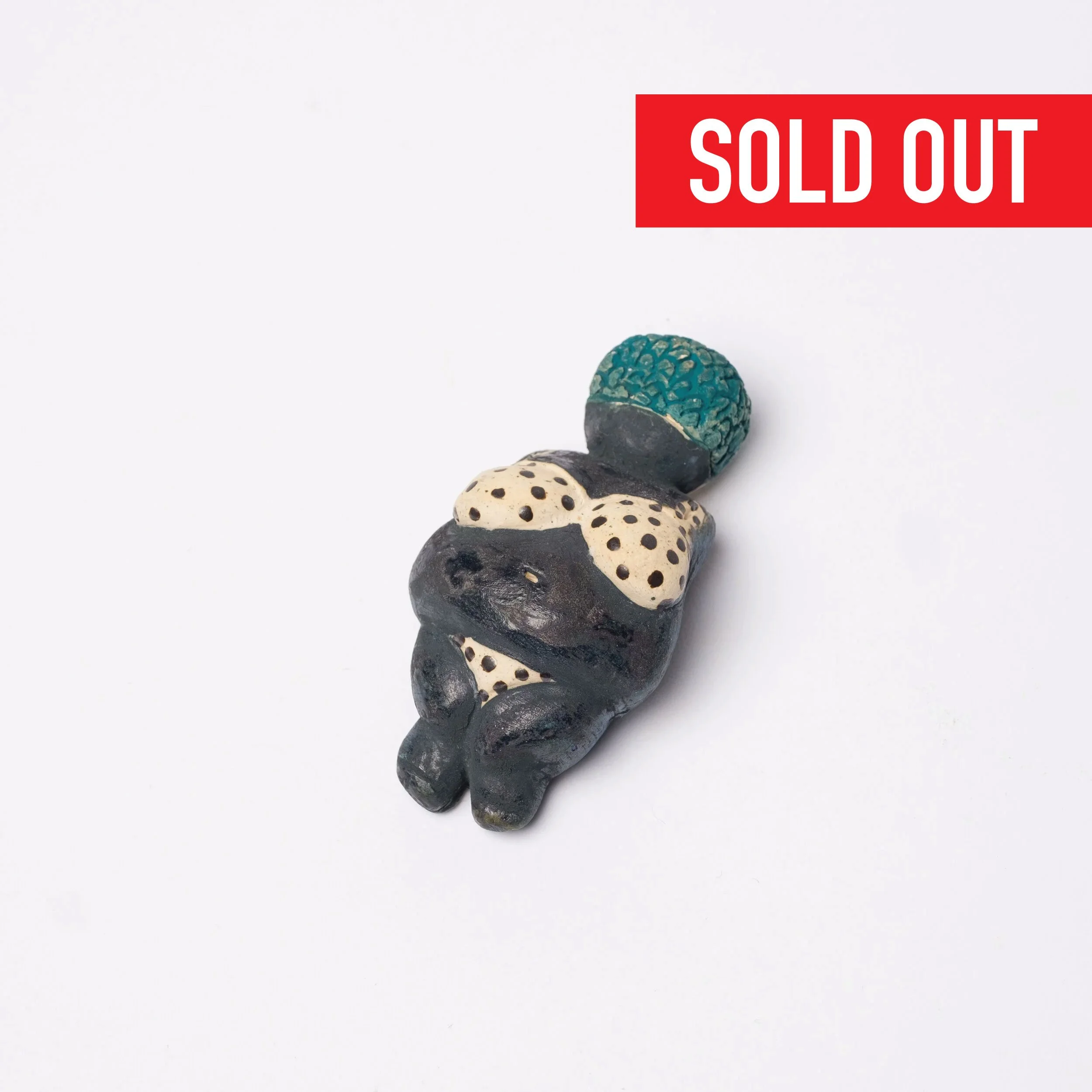
The Venus of Willendorf, discovered in 1908 in Willendorf Austria, is estimated to be created about 30,000,000 BCE as a FERTILITY GODDESS. Archeologists believe that she was held in the palm of the hand or put in a pocket. For Elizabeth, this icon of prehistory is not only sacred as a representation of historic human development, but because she a symbol for the place of pure potentiality within all of us. As a play on the Freudian Term “Penis Envy” we affectionately call her Venus Envy as she is a symbol for all that is possible. Quite the enviable quality indeed. Elizabeth make these forms from both clay and brass as a reminder that there is fertile ground in all of us just waiting to be explored and tapped into. We challenge you to go and find it!

The Venus of Willendorf, discovered in 1908 in Willendorf Austria, is estimated to be created about 30,000,000 BCE as a FERTILITY GODDESS. Archeologists believe that she was held in the palm of the hand or put in a pocket. For Elizabeth, this icon of prehistory is not only sacred as a representation of historic human development, but because she a symbol for the place of pure potentiality within all of us. As a play on the Freudian Term “Penis Envy” we affectionately call her Venus Envy as she is a symbol for all that is possible. Quite the enviable quality indeed. Elizabeth make these forms from both clay and brass as a reminder that there is fertile ground in all of us just waiting to be explored and tapped into. We challenge you to go and find it!
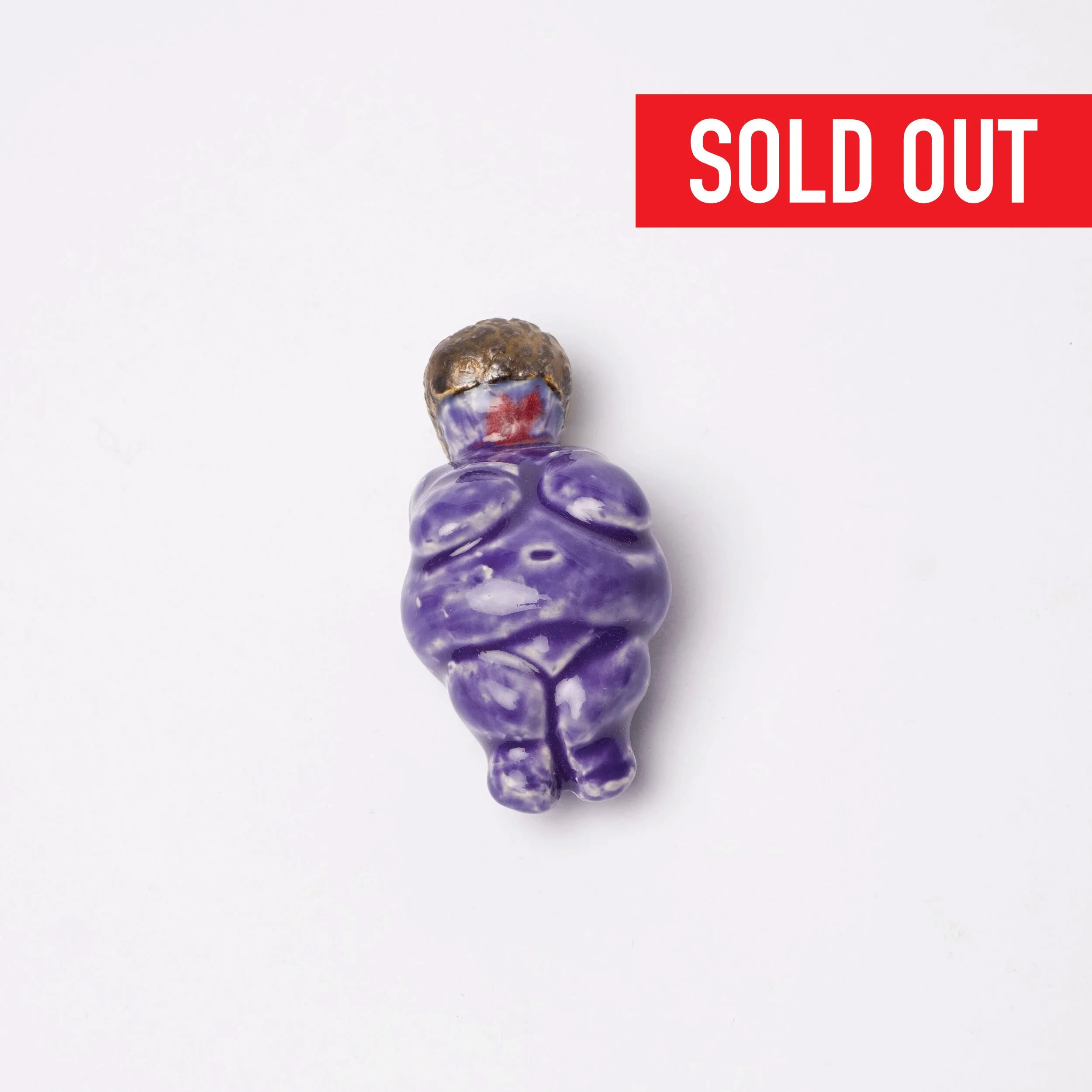
The Venus of Willendorf, discovered in 1908 in Willendorf Austria, is estimated to be created about 30,000,000 BCE as a FERTILITY GODDESS. Archeologists believe that she was held in the palm of the hand or put in a pocket. For Elizabeth, this icon of prehistory is not only sacred as a representation of historic human development, but because she a symbol for the place of pure potentiality within all of us. As a play on the Freudian Term “Penis Envy” we affectionately call her Venus Envy as she is a symbol for all that is possible. Quite the enviable quality indeed. Elizabeth make these forms from both clay and brass as a reminder that there is fertile ground in all of us just waiting to be explored and tapped into. We challenge you to go and find it!

The Venus of Willendorf, discovered in 1908 in Willendorf Austria, is estimated to be created about 30,000,000 BCE as a FERTILITY GODDESS. Archeologists believe that she was held in the palm of the hand or put in a pocket. For Elizabeth, this icon of prehistory is not only sacred as a representation of historic human development, but because she a symbol for the place of pure potentiality within all of us. As a play on the Freudian Term “Penis Envy” we affectionately call her Venus Envy as she is a symbol for all that is possible. Quite the enviable quality indeed. Elizabeth make these forms from both clay and brass as a reminder that there is fertile ground in all of us just waiting to be explored and tapped into. We challenge you to go and find it!

The Venus of Willendorf, discovered in 1908 in Willendorf Austria, is estimated to be created about 30,000,000 BCE as a FERTILITY GODDESS. Archeologists believe that she was held in the palm of the hand or put in a pocket. For Elizabeth, this icon of prehistory is not only sacred as a representation of historic human development, but because she a symbol for the place of pure potentiality within all of us. As a play on the Freudian Term “Penis Envy” we affectionately call her Venus Envy as she is a symbol for all that is possible. Quite the enviable quality indeed. Elizabeth make these forms from both clay and brass as a reminder that there is fertile ground in all of us just waiting to be explored and tapped into. We challenge you to go and find it!

The Venus of Willendorf, discovered in 1908 in Willendorf Austria, is estimated to be created about 30,000,000 BCE as a FERTILITY GODDESS. Archeologists believe that she was held in the palm of the hand or put in a pocket. For Elizabeth, this icon of prehistory is not only sacred as a representation of historic human development, but because she a symbol for the place of pure potentiality within all of us. As a play on the Freudian Term “Penis Envy” we affectionately call her Venus Envy as she is a symbol for all that is possible. Quite the enviable quality indeed. Elizabeth make these forms from both clay and brass as a reminder that there is fertile ground in all of us just waiting to be explored and tapped into. We challenge you to go and find it!
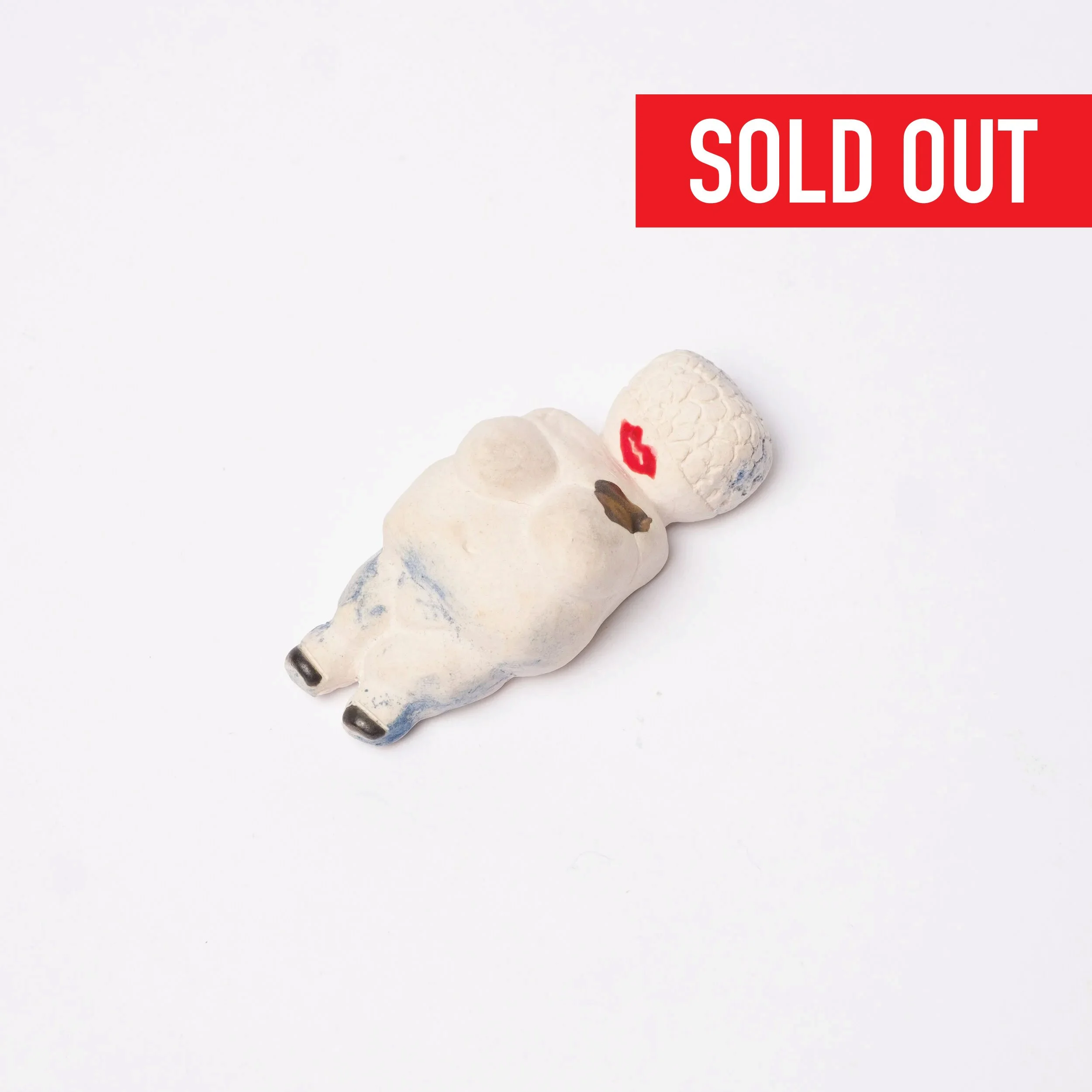
The Venus of Willendorf, discovered in 1908 in Willendorf Austria, is estimated to be created about 30,000,000 BCE as a FERTILITY GODDESS. Archeologists believe that she was held in the palm of the hand or put in a pocket. For Elizabeth, this icon of prehistory is not only sacred as a representation of historic human development, but because she a symbol for the place of pure potentiality within all of us. As a play on the Freudian Term “Penis Envy” we affectionately call her Venus Envy as she is a symbol for all that is possible. Quite the enviable quality indeed. Elizabeth make these forms from both clay and brass as a reminder that there is fertile ground in all of us just waiting to be explored and tapped into. We challenge you to go and find it!
The Venus of Willendorf was discovered in 1908 in Willendorf Austria, and created somewhere around 30,000,000 BCE as a FERTILITY GODDESS. Archeologists believe that she was held in the palm of a hand or put in a pocket when someone wanted to have a baby. For me, this icon of prehistory is not only sacred as a representation of historic human development, but because I see the venus as a symbol for the furtle ground and place of pure potentiality within all of us. I affectionately call her Venus Envy as a play on the Freudian Term “penis envy”. I make these forms from clay and brass as a reminder that this fertile ground and powerful potential we have inside, is just waiting to be tapped into. I challenge you to go and find it!!

The Venus of Willendorf, discovered in 1908 in Willendorf Austria, is estimated to be created about 30,000,000 BCE as a FERTILITY GODDESS. Archeologists believe that she was held in the palm of the hand or put in a pocket. For Elizabeth, this icon of prehistory is not only sacred as a representation of historic human development, but because she a symbol for the place of pure potentiality within all of us. As a play on the Freudian Term “Penis Envy” We affectionately call her Venus Envy as she is a symbol for all that is possible. Quite the enviable quality indeed. Elizabeth makes these forms form both clay and brass as a reminder that there is fertile ground in all of us just waiting to be explored and tapped into. We challenge you to go and find it!